Safety is the lifeline of enterprise development, and full participation is the vital source of safety governance. Since the launch of the Guangxi Enterprise Safety Development Project in August 2025, Guangxi Xintiande Energy Co., Ltd. (hereinafter referred to as “Xintiande Energy”) has precisely aligned with the requirements of the Emergency Management Department of the Guangxi Zhuang Autonomous Region and the Qinzhou Emergency Management Bureau, innovatively exploring a distinctive model of “internal trainer leadership + full-chain care + incentive closed loop,” embedding the principal role of employees throughout the entire project process and achieving a leap from “passive advancement” to “proactive co-governance.”
Build a Strong Internal Trainer Network, Activate “New Momentum” for Full Employee Participation”
Xintiande Energy breaks the traditional “top-down” management model and uses a tiered internal trainer system as a lever to solve the “difficult implementation” problem of full employee participation.
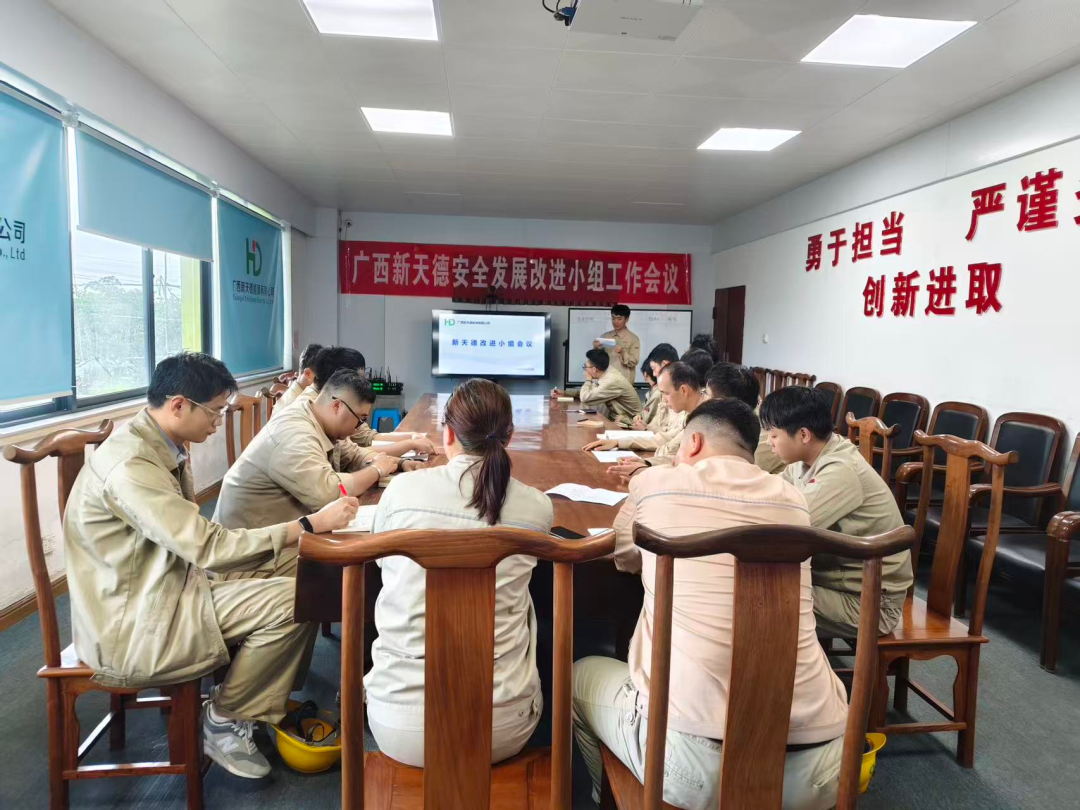
Build a “full-time coordination + workshop implementation” network structure. The company designates the head of the safety department as a full-time internal trainer, taking the lead in forming an improvement team headed by the deputy manager and safety director, with 24 frontline employees as members; at the same time, it selects experienced and highly responsible backbone personnel from each workshop, who become workshop-level internal trainers after specialized training, forming a tiered network of “full-time internal trainers providing overall coordination and workshop internal trainers ensuring precise implementation,” allowing safety improvement work to reach directly into the frontline and down to each position.
Innovate a structured guidance mechanism. Full-time internal trainers lead the establishment of a “five dimensions + dual support” discussion system, using the “people, machine, material, method, environment” five-dimension analysis method to guide employees in accurately identifying hidden hazards, and combining industry typical cases and safety regulatory provisions as dual support to improve the quality of suggestions; at the same time, a special ledger of “issue-measure-responsible person-time limit” is established to ensure that discussion outcomes are traceable and implementable. Workshop internal trainers, based on actual job conditions, regularly organize small thematic seminars, focusing on specific problems such as frontline operational bottlenecks and minor hidden hazards, guiding employees to speak fully, quickly collecting real demands, and effectively solving the “last mile” problem of policy transmission.
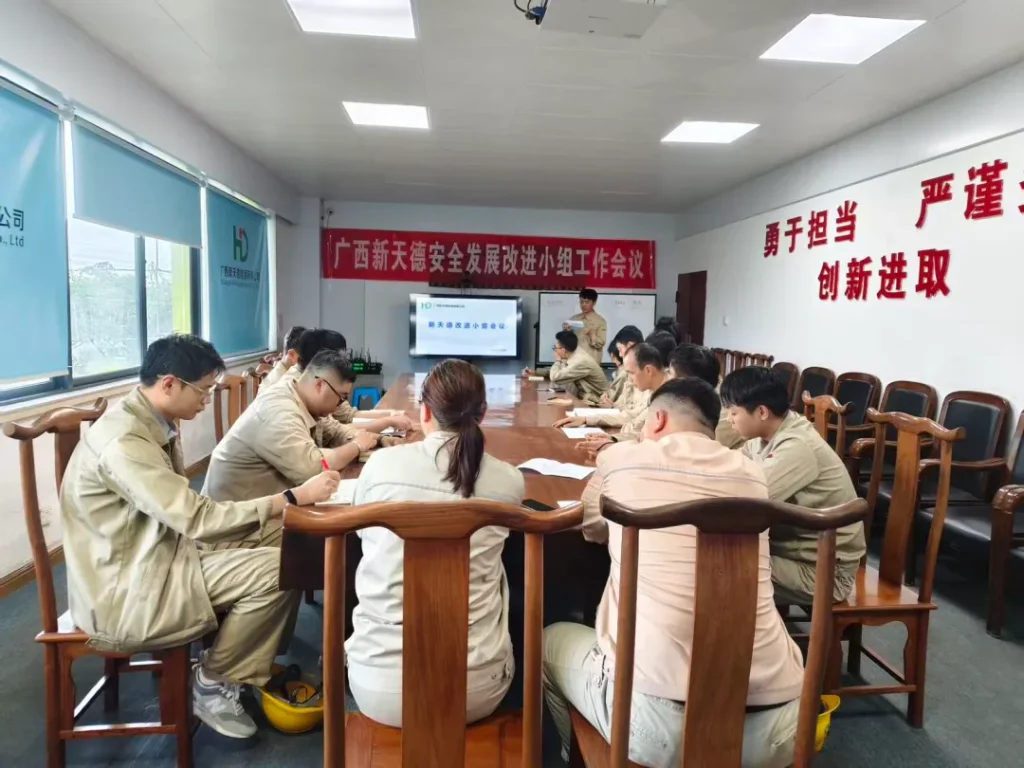
▲Improvement team work meeting
Build a diversified participation platform. Through a combination of “department seminars + cross-workshop exchange meetings + online message areas,” together with workshop internal trainers collecting opinions face-to-face, employees at different positions and levels can fully express their ideas. Full-time internal trainers participate in key discussion segments in a targeted manner, promptly answering questions and guiding direction, forming a good atmosphere in which “all employees think about safety and actively participate in improvement.” As of the end of December 2025, the project achieved full employee coverage, collected a total of 1,281 survey questionnaires, and gathered 150 opinions and suggestions, providing a solid public opinion foundation for safety improvement.
Extend the boundaries of care, build a safety-humanities “symbiosis”
Xintiande Energy breaks the traditional perception that “safety management is limited only to the production plant area,” extending improvement measures to the entire chain of employees' work, commuting, and life, making safety development more compassionate.
Build solid “hard support” for safety. In response to employees' suggestions for optimizing the working environment, the company precisely addresses hardware shortcomings: in terms of safety protection, it adds maintenance platforms, improves ladder safety cages, supplements nighttime lighting, and repairs damaged stairs, fundamentally reducing operational risks; in terms of equipment management, it establishes ledgers for leaks and spills in each unit and improves pipeline and cable tray labeling, making the working environment more standardized; in terms of process assurance, it clarifies certification requirements for special operation personnel and improves the cargo elevator safety management system, enhancing operational compliance and effectively strengthening employees' sense of safety at work.
Deliver the “warmth” of humanistic care. Focusing on employees' urgent difficulties and pressing concerns, it precisely implements livelihood measures: in response to the difficulties of electric vehicle charging and disorderly parking, it adds charging interfaces and formulates standardized management measures; by optimizing work processes and reasonably allocating manpower, it reduces after-shift overtime and protects employees' rest rights; actively responding to commuting needs, it plans to add city commuter buses covering major residential areas, effectively solving the travel difficulties of commuting to and from work.
Keep channels for appeals “fully responsive.” It builds a no-blind-spot channel combining “online work group messages + offline bulletin board QR codes + face-to-face collection by the improvement team,” collecting employee appeals without setting scope or thresholds. Suggestions involving humanistic care are prioritized for discussion and rapidly implemented, truly achieving “safety guaranteed and appeals handled,” and consolidating a strong joint force of government-enterprise collaboration in safety.
Link incentives in a closed loop, build a “firewall” for hidden hazard governance”
In accordance with the requirements of the internal reporting and reward mechanism for accident hidden hazards, the company innovates a “selection incentive + closed-loop management” linkage model to ensure that hidden hazard rectification is not compromised and that suggestions are implemented without going through the motions.
Clarify the orientation of positive incentives. “Participation in hidden hazard investigation, quality of rationalization suggestions, and implementation of rectification cooperation” are included as core indicators in the “Safety Model” selection, clearly conveying the value orientation that “participating in safety improvement = striving for honor and recognition,” fundamentally stimulating employees' internal motivation to actively participate in hidden hazard governance.
Solidify the full-chain closed-loop process. Strictly implement the full-chain mechanism of “suggestion collection-screening and evaluation-discussion and adoption-rectification advancement-effectiveness acceptance-incentive fulfillment,” directly linking rectification completion with “Safety Model” selection, achieving “rectify one item, recognize one item, incentivize one item.”
Strengthen the fulfillment of incentive commitments. Strictly implement the project's special incentive funding commitment. For employees selected as “Safety Models,” the company not only gives honorary commendation and financial rewards, but also gives preference in position promotion and further training. Positive incentives have promoted the 13 rationalization suggestions already adopted, with a rectification completion rate of 77%, and there has been no situation of “half-finished rectification or suggestions falling into oblivion,” allowing closed-loop management to truly take root.
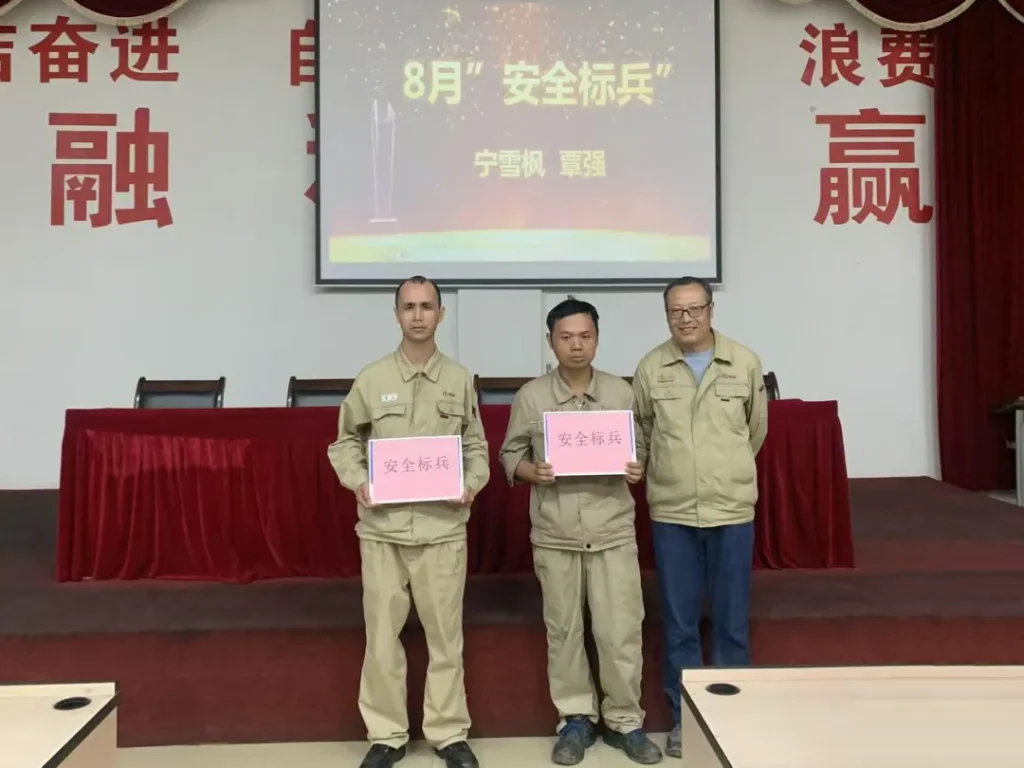
▲Awarding prizes to Safety Models
Next, Xintiande Energy will continue to deepen the results of the safety development project, further optimize the internal trainer guidance mechanism, full-chain care measures, and incentive closed-loop management model, refine the “Safety Model” selection criteria and rectification ledger management process, promote the transformation of various practical practices into normalized and long-term mechanisms, and continue to consolidate the safety foundation.
This article is reprinted from the WeChat public account @Qinzhou Emergency Management